NADA Miami 2026: Adrienne Lee

Adrienne Lee: Abstract Painting in Relation to the Act of Writing
dmincubator (New York, NY)
NADA Miami
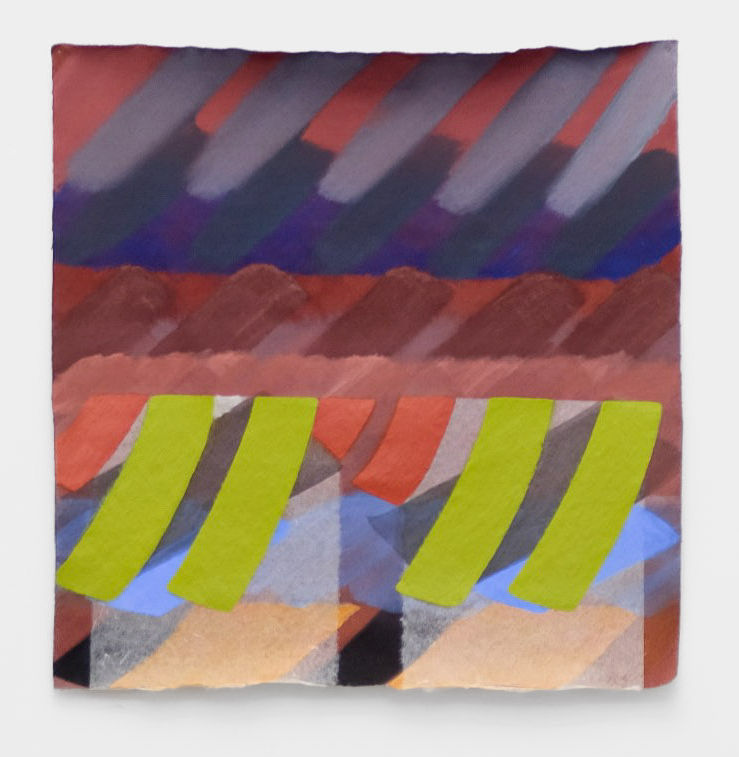
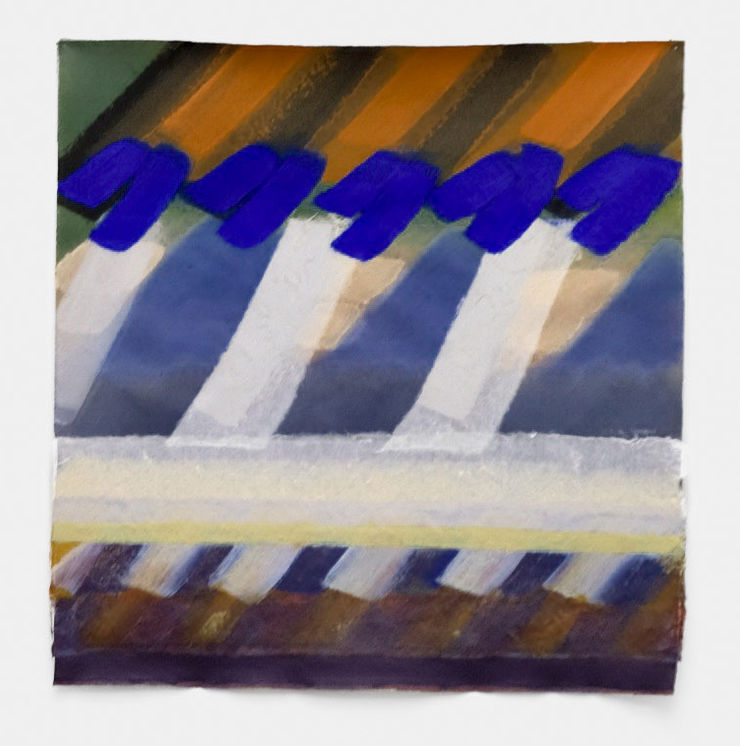
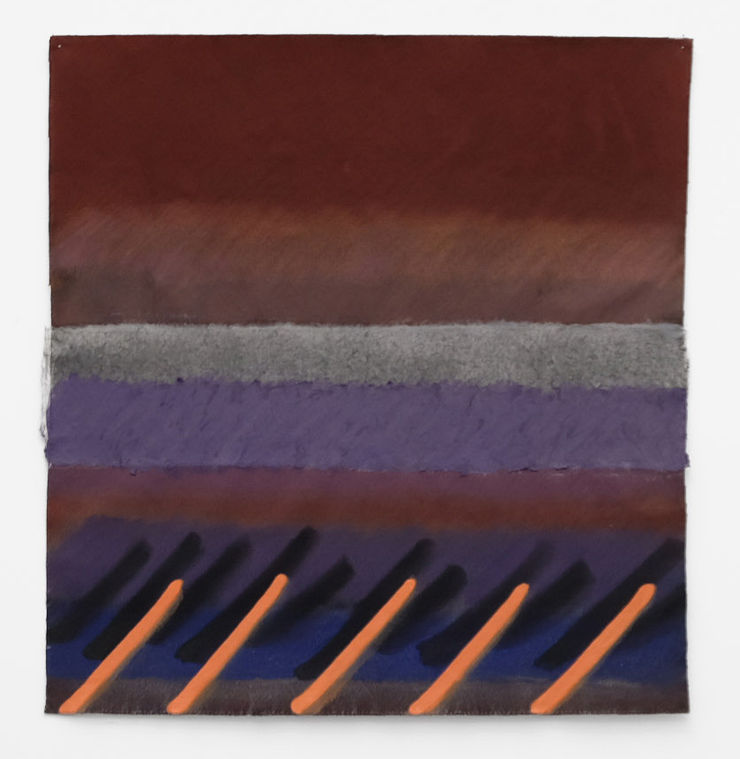
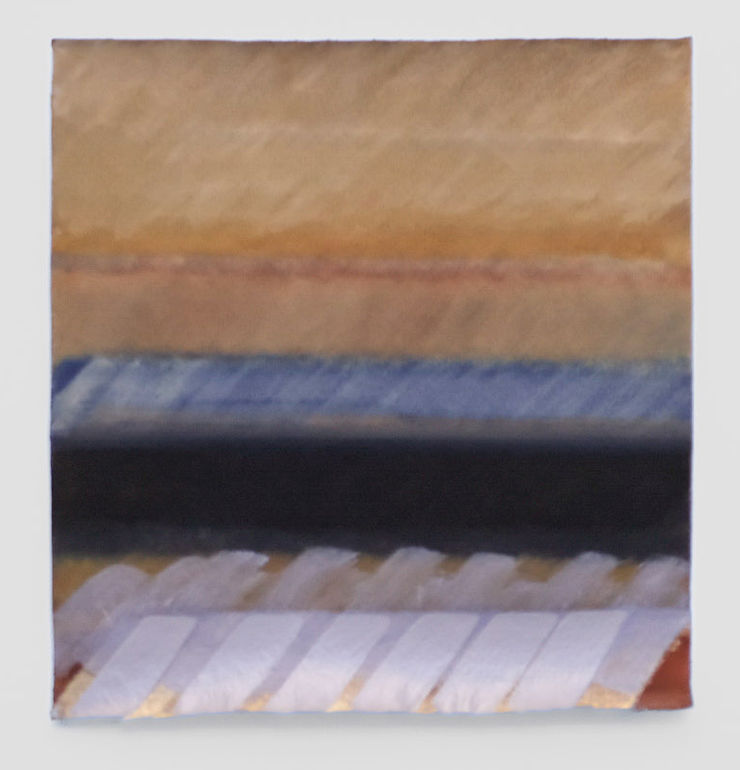
Adrienne Lee features repeating gestures and movements in her abstract paintings, which she has proclaimed as “writing.” Writing constitutes the act of the visual representation of language, which also includes speech as the auditory counterpart. Why has Lee chosen writing over spoken words that western philosophers have traditionally privileged (over written words)? And is the artist examining the content of the writing or the very moment, the process, and the act of writing?
“Abstract Painting in Relation to the Act of Writing” is a solo presentation by dmincubator at NADA Miami, curated by Daniela Mercuri. In this presentation, Lee presents both very large, monumental-sized works of abstraction that exert a sense of expansive space like an abstract landscape, and smaller abstract works that serve as intimate studies for the larger works. The dialogue between the smaller, early iterations and the larger, later finished works shows the evolution and refinement of the artist’s vision.
And this is mainly possible through painting and writing, both of which share the power of revisions and subsequent iterations, which are absent in spoken words that demand spontaneity and articulation of all points in the moment.
If spoken word is like calligraphy with ink (done with spontaneous, singular marks without any revisions), then the written word is like an oil painting (allowing for layering and revisions).
Lee studies writing as an abstract gesture, repetition, and an ongoing process of denying the full formation of words and meanings and never arriving at the final destination. Lee repeats certain characters in either the English or the Korean alphabet, either in cursive or calligraphic motif, such as the letter ‘A’ or the equivalent of the letter ‘J’ in Korean (‘ㅈ’).
Lee’s investigation of the act of writing as a subject matter of her abstraction is not truly Derriderian, however, and even less Saussurian. Ferdinand de Saussure laid the foundations of structural linguistics by contributing the idea that signs consist of the signifier and the signified. He also argued that signs gain meaning from their relationships and contrasts with other signs. Jacques Derrida, on the other hand, developed the post-structuralist concept of deconstruction and critiqued logocentrism of western philosophy that prioritized speech over written words.
In Lee’s paintings that examine the act of writing, the artist freezes the moment of writing by applying the same letter and the same action over and over again, like a repeating mantra. While language makes us think that we understand the subject that the words are signifying, Lee’s painting refuses any form of signification beyond the formal relationship of color and form. This is because words never fully form in Lee’s paintings, which are alphabets carrying sounds of vowels or consonants, rather than hieroglyphics like the Egyptian writing system or pictographic characters like the Chinese characters. This is the conceptual framework by which Lee’s paintings operate, in which a written letter replicates itself infinitely as the same letter without any differences of meaning and no latency between the meanings that facilitate differance.
In Lee’s paintings, meanings cease to exist outside the immediate visual and formal experience of color, form, texture, and scale because the artist understands the limitation of words, whether spoken or written, in relation to painting. This is because words are not enough to capture the entirety of the visual experience. The word “pink” does not fully capture the particular color pink.
Lee’s paintings are often displayed as raw canvases (layered on with acrylic paint and hanji) on the floor or the ground, as if to exert a sense of territorial space like the embassy compound in which Lee used to live as the daughter of a South Korean diplomat.
While Lee in part reflects on her lived experiences overseas that made her question her own sense of identity, her paintings achieve something entirely different: they condense the moment of writing without allowing the writing to complete itself into the formation of complete words. And this denies meanings and the relationships of meanings, collapsing the entire ecosystem of words and meanings.
In fact, Lee breaks down the dichotomy between speech and writing by representing speech through writing. (While the artist has described the abstract gestures as relating to writing, the conclusion that Lee focuses on writing rather than spoken language may be misleading upon subsequent examination.) This is because the consonants and vowels represent sounds, and it’s impossible to make a painting enact sounds, but it is possible to suggest sounds of speech through writing or visual representation of the letters. Writing is the signifier of speech, the signified, and speech is the signifier of writing, also the signified.
In conclusion, Lee collapses the ecosystem of words and meanings and breaks down language to its core building blocks - letters - because she may seek to break through the preconceptions and predefined imagery that words and signs convey.
The lion is strong and brave. The rabbit is gentle and cute.
These are all assumptions that words carry due to their symbolic means of signification.
The artist defies these preconceived notions, stereotypes and expectations. What lies next for her is ultimate liberation and freedom on canvas, with paint, with gesture, with colors, and forms that exist prior to language, at the very moment of existence and being.